

REQUEST A DEMO
Thank you! Your submission has been received!
Oops! Something went wrong while submitting the form.
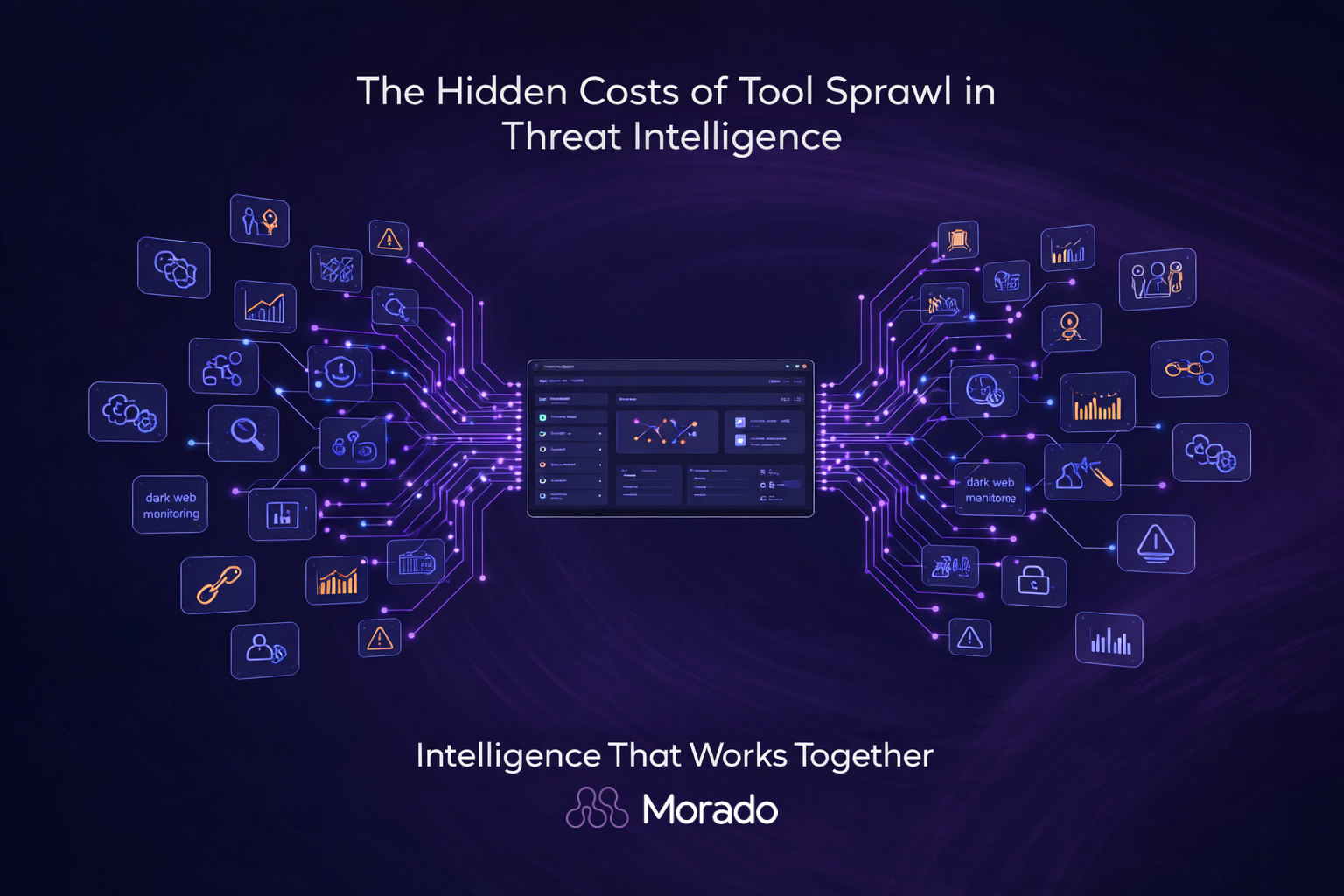
As cyber threat intelligence (CTI) programs mature, organizations find themselves managing an increasingly complex collection of specialized tools. A threat intelligence platform (TIP) may sit alongside dark web monitoring, digital risk protection solutions, attack surface monitoring platforms, third-party risk intelligence platforms, OSINT analysis tools, and VIP monitoring services. Each capability addresses a legitimate need, but over time this accumulation can create what many security leaders now recognize as tool sprawl in threat intelligence.
While adding point solutions often feels like progress, the reality is that fragmented tooling can introduce operational inefficiencies, increase costs, and ultimately slow down threat response. The challenge isn’t simply the number of tools. It’s the lack of cohesion between them.
One of the most significant impacts of CTI tool sprawl is data fragmentation. Threat intelligence data ends up distributed across multiple platforms that rarely integrate seamlessly. Analysts frequently have to pivot between dashboards, manually correlate data, or duplicate investigations just to build context around a threat. This slows analysis, increases the chance of missed signals, and extends the time from detection to action. In an environment where threat actors move quickly, delays caused by disconnected data can translate directly into increased organizational risk.
Cost is another factor that often goes underestimated. Maintaining multiple threat intelligence tools means managing licensing fees, integrations, vendor relationships, and training requirements across several systems. Beyond direct financial costs, there’s also the productivity impact on analysts who must navigate different interfaces and workflows. Tool fatigue is real in cybersecurity, and it can lead to inconsistent usage, overlooked alerts, and inefficiencies that undermine even the best intelligence data.
Fragmentation also makes it harder for organizations to achieve a unified view of their external threat landscape. Intelligence related to brand impersonation, dark web exposure, third-party risk, infrastructure vulnerabilities, and digital footprint monitoring may all exist, but without correlation it becomes difficult to prioritize risk effectively. Security leaders often struggle to connect these dots into a cohesive narrative that supports timely decision-making and strategic risk reduction.
This is why many organizations are exploring threat intelligence consolidation strategies. The goal isn’t simply reducing the number of tools, but creating a more integrated environment where intelligence flows naturally between collection, analysis, prioritization, and response. When capabilities such as TIP workflows, digital risk protection, attack surface monitoring, OSINT analysis, third-party risk intelligence, and VIP monitoring operate within a unified framework, analysts spend less time managing tools and more time mitigating threats.
This shift reflects a broader evolution in cyber threat intelligence programs. Success is increasingly measured not just by the volume of intelligence collected, but by how effectively organizations turn that intelligence into operational outcomes. Faster correlation, better context, and streamlined workflows allow teams to move from actionable intelligence to decisive action with greater confidence.
Modern CTI teams are looking for platforms that reduce complexity while improving visibility across their threat landscape. Solutions designed to unify historically siloed intelligence functions can help security teams reduce tool sprawl, improve operational efficiency, and strengthen overall risk posture without sacrificing depth of insight.
Threatnote was built around this exact challenge. By bringing together threat intelligence management, digital risk protection, dark web monitoring, attack surface monitoring, third-party risk visibility, OSINT analysis, and VIP monitoring into a single environment, the goal is to help teams spend less time stitching data together and more time acting on it.
If you’re evaluating how to streamline your CTI stack or simply comparing approaches to threat intelligence consolidation, it may be worth taking a closer look at how unified platforms are evolving. Even a quick discussion can help clarify whether consolidation could reduce operational friction in your environment.